


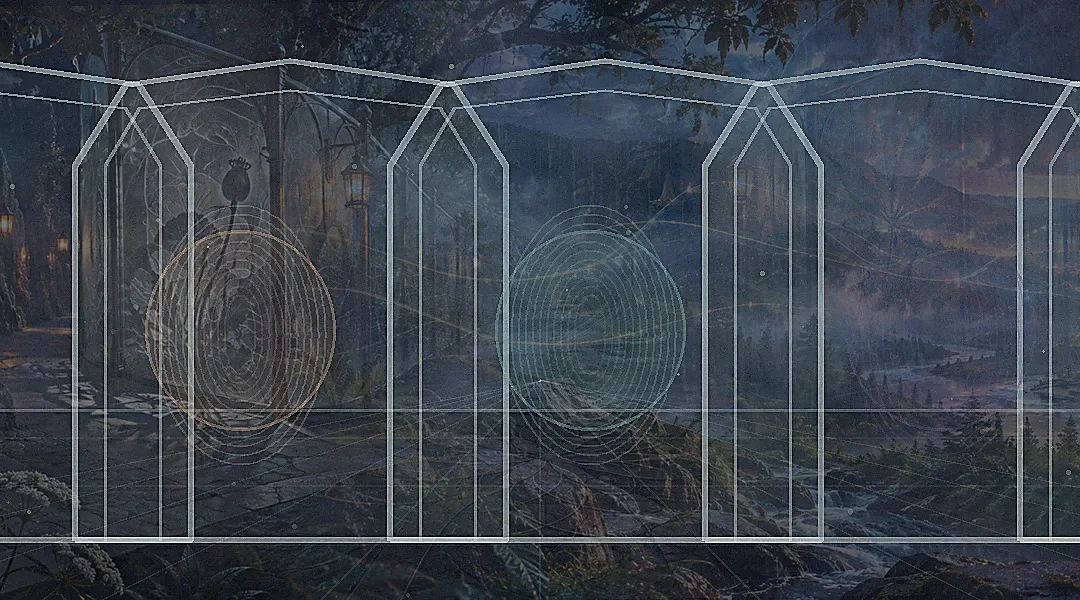
You wake from a dream so vivid that the bedroom seems, for a few seconds, like the less convincing world. In meditation, a minute can stretch into an unfamiliar kind of spaciousness. During a psychedelic experience, the boundary between observer and scenery may vanish altogether. The strange part is not merely that these states exist. It’s that our ordinary sense of reality feels so final until another mode of consciousness arrives and quietly disputes it.
An altered state of consciousness is a meaningful shift in how a person experiences awareness, attention, perception, time, selfhood or the surrounding world. Dreams, contemplative absorption, hypnosis, flow and psychedelic states can all fit within the broad conversation. So can states associated with anesthesia or neurological conditions—though their causes and consequences are radically different. The term names a family resemblance, not a single hidden destination.
For psychonauts, the question is irresistible: if the mind has more than one way of presenting a world, what does that reveal about the one we inhabit every morning? Neuroscience gives us important clues. Philosophy, contemplative traditions and first-person testimony keep the inquiry gloriously unfinished.
An old fascination with a modern name
Human cultures have long described unusual states through ritual, dreams, prayer, fasting, music, dance and meditation. The modern interdisciplinary category gained a memorable foothold when psychologist Charles T. Tart edited Altered States of Consciousness in 1969, gathering scientific work on dreaming, meditation, hypnosis and other departures from ordinary waking awareness. The phrase is not a claim that all these states have one origin. It is an invitation to compare them carefully.
Tart also asked whether the habits of a particular state might influence how we investigate it. The question still resonates. We do most of our science while awake, alert and verbally articulate, then ask people to describe experiences in which the usual machinery of memory and language may work differently. A dream is often clearest before breakfast. A mystical experience can feel ineffable even years later. The difficulty of describing an event is a methodological problem, not proof that the event was trivial.
Ordinary consciousness is extraordinary, too
The familiar waking world arrives already assembled. Vision seems to show us objects “out there”; hearing locates a voice; the body maintains a stable sense of where it begins and ends. Yet each of these impressions depends on ongoing activity in the nervous system. Attention selects, memory supplies context, and expectation helps the mind interpret uncertain signals. The result is useful enough that we rarely notice the construction.
This is one reason Donald Hoffman’s interface analogy intrigues psychonauts. A computer desktop gives you workable symbols without exposing the circuitry underneath. As a philosophical and scientific proposal, Hoffman’s larger theory is debated. But as a question it has bite: perhaps our usual experience is an exquisitely practical interface rather than an exhaustive portrait of reality.
The fact that perception is constructive does not decide what lies beyond it. It makes altered states worth studying because they show, from within, how different the presentation can become. Our article on psilocybin and the five senses follows that transformation through sound, color, touch and the body’s shifting map of itself.
Dreams: a convincing world with its own physics
While dreaming, a person may accept impossible architecture, abrupt changes of identity and conversations with the long-dead as perfectly ordinary. The dreamer’s world can be coherent enough to inspire joy, terror or revelation, even though its rules are wildly unlike those of waking life. It is a direct reminder that felt reality and waking-world constraints are not the same thing.
Sleep researchers compare brain activity across dreaming and dreamless sleep to investigate the conditions associated with experience itself. A 2024 review in Neuron, Consciousness and Sleep, explores how studying those contrasts can inform theories of the neural basis of awareness. The important point is not that dreams “prove” another dimension. It is that conscious life takes several forms even when we never leave the bed.
Lucid dreams sharpen the puzzle. Some dreamers recognize that they are dreaming while the dream continues; occasionally they can influence its course. That curious mixture of dream imagery and reflective awareness has been studied with sleep-laboratory methods. Scientists can investigate the state, while the dreamer’s report supplies the essential information that they knew they were dreaming. Two ways of observing one event become mutually useful.
Meditation: changing the relationship to experience
Meditation is not one thing. Focused attention practices train returning to an object such as the breath; open monitoring practices cultivate awareness of changing sensations and thoughts without choosing one as the exclusive focus. Traditions differ in aims, metaphysics and ethical commitments. Some practitioners speak of tranquillity or clarity; others describe profound changes in the sense of self or the distinction between observer and observed.
A widely cited review by Lutz, Slagter, Dunne and Davidson outlined how focused attention and open monitoring can involve different attentional skills. Those are useful research categories, not universal maps of every contemplative tradition. Meditation also involves training over time, which makes its mechanisms and degree of voluntary control different from those of a pharmacologically induced state.
Still, the apparent overlaps deserve attention. A meditator describing the disappearance of a separate observer may sound uncannily like a psychonaut recounting ego dissolution. Is it the same experience reached by different routes? Related aspects of self-experience? Or superficially similar language describing distinct phenomena? The best answer will have to honor both the shared features and the differences. See psychedelics, mindfulness and meditation for a closer comparison.
Flow, hypnosis and absorption: quieter departures
Not every altered state arrives with fractals or revelations. A musician can become so absorbed in performance that self-conscious commentary fades and time changes pace. An athlete or artist may describe an action unfolding almost without a separate narrator. These reports belong to discussions of flow—a state involving concentrated engagement in a demanding activity—although the evidence and definitions vary by context.
Hypnosis raises another set of questions about suggestion, attention and experience. Some people report striking shifts in what they feel or perceive in response to suggestion; susceptibility and responses vary. Hypnosis does not simply turn off agency, and popular depictions of irresistible mind control are misleading. Like flow, it reminds us that the manner in which attention is organized can transform the felt world without reproducing the pharmacology of psychedelics.
These quieter states are valuable comparisons precisely because they don’t all look alike. A good Atlas should represent relationships among experiences without pretending that everything called “transcendent” is the same neurobiological event.
Psychedelics: when the ordinary boundaries loosen
Classic serotonergic psychedelics such as psilocybin, LSD and DMT affect signaling involving the 5-HT2A serotonin receptor. Scientists study changes in brain dynamics, perception, emotional significance and self-related processing alongside the reports people give. The compound matters; so do context, expectations and individual differences. Altered states are never just lists of symptoms produced by a single molecular switch.
Carhart-Harris and Friston’s 2019 REBUS model proposes that psychedelics may relax the influence of some high-level expectations, allowing other information and associations greater impact. It is an influential theoretical framework, not the final explanation of the mind. The broader idea is fascinating: some aspects of what ordinarily feels like solid reality may depend on patterns of prediction that can temporarily change.
In a 2023 study, Timmermann and colleagues combined EEG and functional MRI while investigating DMT in a controlled research setting involving 20 healthy volunteers. They reported changes in functional connectivity and electrophysiological activity. Those measurements invite comparison with the astonishing environments and presences described in DMT accounts. But no scan can yet tell us what a particular figure “really was,” nor does a pattern of brain activity settle the metaphysical interpretation of an encounter.
For a deep dive, visit our introduction to DMT and the recurring mystery of DMT entities. The first explains the substance and research; the second takes firsthand reports of seemingly autonomous beings seriously without pretending the ontology is resolved.
Why different states can feel strangely familiar
Across dreams, meditation and psychedelic experiences, people sometimes describe timelessness, a vanishing boundary of self, geometrical imagery, an unmistakable presence, or an extraordinary sense of knowing. The similarities are worth mapping. They might reflect shared features of human perception and memory, common cultural language, or deeper questions about consciousness that our current categories fail to capture.
This is where Jung’s interest in recurring images and meaningful coincidence can sharpen the curiosity without being turned into proof. A recurring motif is a pattern to investigate. Synchronicity, in its ordinary sense, concerns an event experienced as meaningfully coincidental; the event and the proposed explanation for its meaningfulness are separate matters. Something can be genuinely moving without carrying an experimentally established causal mechanism.
The difference between correlation and cause matters here, but the discovery of a resemblance is not intellectually worthless. It is the beginning of a question. Could researchers compare independently collected accounts, document prior expectations and identify which motifs recur beyond what chance or shared storytelling predicts? That would be more interesting than either automatic belief or automatic dismissal.
Not every altered state is desirable
“Altered” is descriptive, not a compliment. Sleep deprivation, intoxication, anesthesia, seizures, severe distress and other medical conditions can change consciousness in ways that are dangerous, disabling or frightening. A blissful meditative state, a medically induced loss of awareness and a seizure are not variations of one spiritual achievement. Different causes, monitoring needs and consequences must remain clear.
Psychedelic experiences may also become overwhelming. People can feel anxiety, confusion or lasting distress, and individual medical or psychiatric vulnerabilities matter. Describing a state as profound does not make it safe or beneficial for everyone. Taking consciousness seriously includes respecting how fragile it can be.
Clinical studies apply screening, monitoring and support for reasons that cannot be dismissed as mere bureaucracy. Public educational articles should invite thoughtful inquiry, not serve as instructions to induce risky states or replace individual medical advice.
What an altered state can reveal—and what it cannot settle
The strongest philosophical temptation is to promote one extraordinary experience into a universal theory of reality. I understand the impulse. When a state feels more vivid than ordinary waking life, its significance can be impossible to shake. But a person’s experience of certainty, however sincere, is not itself a laboratory measurement of an external proposition. Equally, the presence of a neural explanation would not make the personal meaning evaporate.
We can hold several layers together: what occurred, how it was experienced, what changes in the brain or body were measured, and how the person interprets its significance. Keeping those layers distinct isn’t a dry academic ritual. It is how you stop one question from silencing another.
A dream may reveal something emotionally true without being a literal prophecy. Meditation may alter the way a person relates to suffering without demonstrating every metaphysical proposition in a tradition. A psychedelic journey may inspire a work of art, a change of life, or a decades-long question. Each deserves to be understood on its own terms.
Art from the edges of ordinary reality
A painting can do something a lab chart cannot: evoke the feeling of space folding, time slowing, or the self becoming part of the landscape. Psychedelic art takes the translation problem seriously. Through repetition, impossible perspective, luminous surfaces and recurring forms, it gestures toward experience without needing to claim that every vision is an aerial photograph of a hidden dimension.
Our psychonaut art and psychedelic art posters are one way those questions find form. The best work doesn’t end the conversation; it makes a viewer notice that the familiar world could perhaps be seen differently.
The door we keep walking through
What is ordinary consciousness? Usually it is the state we happen to be in when we ask the question. Dreams, absorption, contemplation and psychedelics trouble that assumption by providing other vantage points. They aren’t interchangeable, and they don’t come with a universal map of what lies beyond them. Yet together they show just how much remains to learn about being aware at all.
Maybe that is the deepest value of studying altered states: not collecting ever stranger anecdotes, but allowing them to make our account of the human mind more capacious, precise and humane. When consciousness changes, the questions change with it. That is a door worth leaving open.
Selected sources
Charles T. Tart, ed., Altered States of Consciousness (1969), historical collection; Consciousness and Sleep (2024 review); The Neuroscience of Lucid Dreaming (2024 review); Lutz et al., Attention Regulation and Monitoring in Meditation (2008); Carhart-Harris and Friston, REBUS and the Anarchic Brain (2019); Timmermann et al., Human Brain Effects of DMT Assessed via EEG-fMRI (2023). Each addresses a specific part of this comparison; none establishes a universal mechanism for every altered state.
Key concepts
Brief definitions for terms used in this article.
5-HT2A
A serotonin receptor subtype involved in the effects of several classic psychedelics.
ego dissolution
A reported alteration in the usual sense of being a distinct self. Reports vary and do not establish any metaphysical interpretation.
serotonin
A signaling molecule involved in many functions throughout the brain and body.
mystical experience
A term researchers may use for certain self-reported experiences of unity, significance or transcendence, not proof of supernatural claims.
psilocybin
A naturally occurring compound that the body converts to psilocin; its effects and risks depend on many factors.
More reading tools
Also connected to this article
These published essays link here through Atlas-curated or editor-selected connections.
Your Reading Shelf
Saved only in this browser.